Arkansas, State Broadband Director
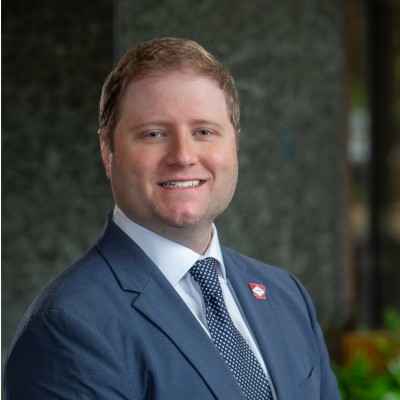
Glen Howie serves as Director of the Arkansas State Broadband Office, where he acts as the chief broadband advisor to Governor Sarah Huckabee Sanders and leads Arkansas' efforts to expand broadband access and digital opportunity statewide. Since joining Arkansas in 2022, Glen has overseen the implementation of one of the nation's most ambitious broadband initiatives, managing more than $1.5 billion in federal broadband funding and helping position Arkansas among the country's leading states in broadband deployment and connectivity growth. His work focuses on ensuring that every Arkansas community, regardless of geography, has the infrastructure necessary to participate fully in the modern economy and compete for the jobs and industries of the future.
Prior to joining Arkansas, Glen served with the Louisiana Office of Broadband Development and Connectivity, where he helped launch and implement Louisiana's statewide broadband expansion efforts. He is a frequent speaker on broadband policy, digital opportunity, and the intersection of technology and public policy.
Glen holds a bachelor's degree in Finance and a Master of Public Administration from Louisiana State University. In 2023, he was recognized as one of Arkansas Business' 40 Under 40 honorees. He lives in Little Rock with his wife, Julie, and their son, Teddy.
A dynamic discussion among state broadband officials about multiple broadband programs (BEAD, CPF, SLFRF and RDOF) converging 2026 deadlines and the collaboration required to overcome the barriers to deployment ensuring the promise of universal broadband is finally delivered.
We will discuss BEAD’s broad bipartisan support with potential to be a major win for federal, state, and local governments. Specifically, we will explore the opportunities at the local level for BEAD, and some of the challenges that still need addressing.
Federal, state, and local governments have varying authorities and roles to address barriers to BEAD deployment. We plan to examine the unique role state broadband offices can play in helping overcome obstacles related to permitting, poles, and easements.
This panel will cover:
Permitting - Permitting challenges impacting network expansion across the country. We will discuss concrete steps state and local governments can take to reduce permitting delays, and which broadband ready practices states have already taken and those outcomes.
Pole Attachments - We wil also include questions about how states should balance pole replacement funding, utility responsibility, and fair cost distribution, and what innovations in undergrounding or grid modernization can accelerate BEAD builds.
Easements and Rights of Way - Included discussion around how states can clarify or modernize antiquated easement laws to support rural buildout, and where federal and state authorities need tighter coordination.
The NTIA BEAD program has already allocated approximately 20 billion dollars in deployment funds. Eligible Entities and Subgrantees are actively planning, forecasting, scheduling, procuring, and designing. But what happens later on down the line? Local permitting is where deployment plans meet the real world—and sometimes collide with it.
This candid panel brings together state broadband leaders and on the ground practitioners to share stories about the challenges, surprises, and human moments behind local permitting. From unexpected roadblocks to hard won breakthroughs, attendees will hear what it really takes to navigate local permitting while keeping projects (and tempers) on track. This session will emphasize how early, consistent, and respectful engagement at the local level, including “boots on the ground,” can dramatically reduce delays and improve project outcomes. Panelists will explore how these relationships are especially critical in smaller jurisdictions where staff juggle multiple roles, and how, by investing in these partnerships, Subgrantees can unlock smoother reviews, clearer feedback loops, and more collaborative problem-solving throughout the permitting process. This panel will dive into real-world examples and highlight the human side of deployment: the towns that became partners, the jurisdictions that threw curveballs, as well as the collaborative relationships that helped move projects forward despite those obstacles.
Panelists will share best practices and what it’s like to navigate mismatched requirements, shifting timelines, seasonal moratoriums, and the occasional “lost” application.
If you’ve ever walked into a permit office with optimism and walked out feeling frustrated, this conversation is for you! Join us for honest stories, real world lessons, and shared discussion.